Kathmandu: Nepal’s economy recorded mixed movements in the first month of the fiscal year 2026/27, with inflation remaining close to 6 percent while remittance inflows and foreign exchange reserves continued to strengthen.
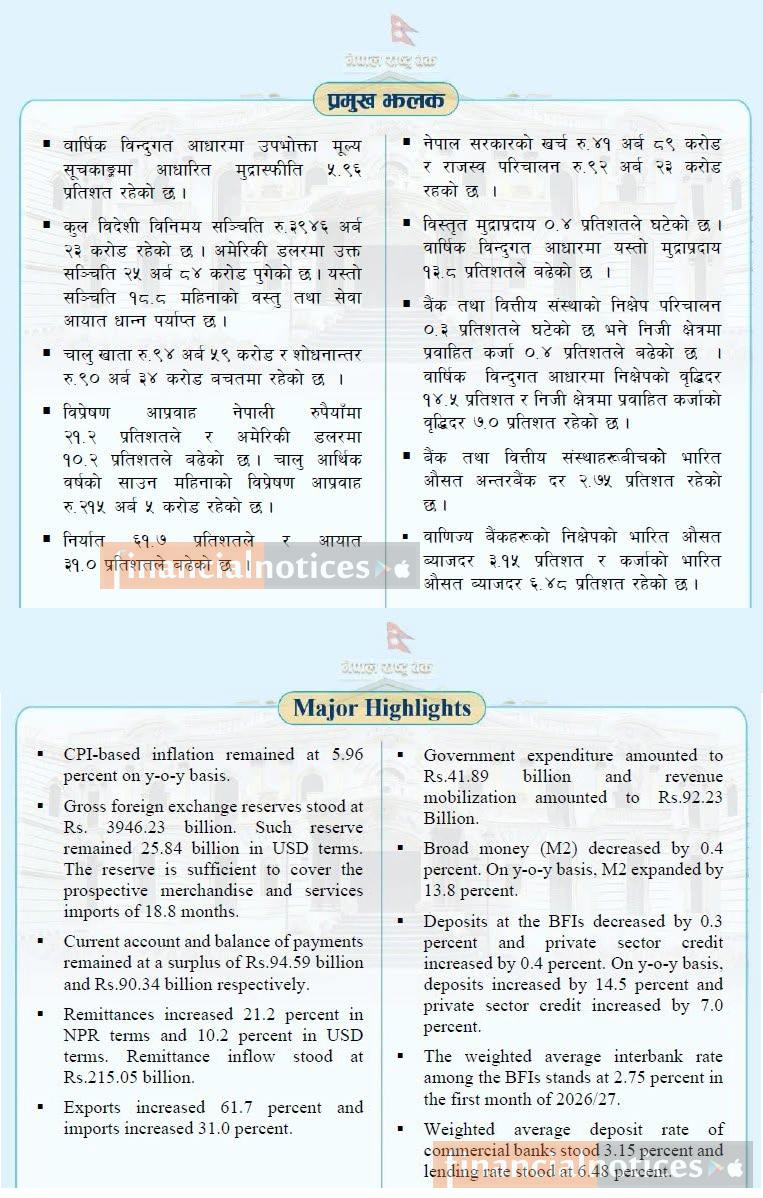
According to the latest figures from Nepal Rastra Bank (NRB), consumer price inflation stood at 5.96 percent year-on-year during the review period.
The country’s foreign exchange position remained comfortable. Gross foreign exchange reserves reached Rs. 3.946 trillion, including USD 25.84 billion in US dollar terms. The reserves are enough to cover an estimated 18.8 months of merchandise and services imports.
Nepal also maintained a surplus in its external accounts. The current account recorded a surplus of Rs. 94.59 billion, while the balance of payments remained in surplus at Rs. 90.34 billion.
Remittances continue to support the economy
Remittance inflows, a major source of foreign currency for Nepal, rose significantly during the period. Nepal received Rs. 215.05 billion in remittances, an increase of 21.2 percent in Nepali rupee terms and 10.2 percent in US dollar terms compared with the same period a year earlier.
Exports also recorded strong growth, increasing by 61.7 percent, while imports rose by 31 percent.
Government revenue exceeds expenditure
Government spending stood at Rs. 41.89 billion during the period, while revenue mobilisation reached Rs. 92.23 billion.
In the financial sector, broad money supply (M2) declined by 0.4 percent during the period. On a year-on-year basis, however, M2 had expanded by 13.8 percent.
Deposits at banks and financial institutions decreased by 0.3 percent, while credit to the private sector increased by 0.4 percent during the review period. Compared with a year earlier, deposits grew by 14.5 percent, while private-sector credit increased by 7 percent.
Interest rates remain relatively low
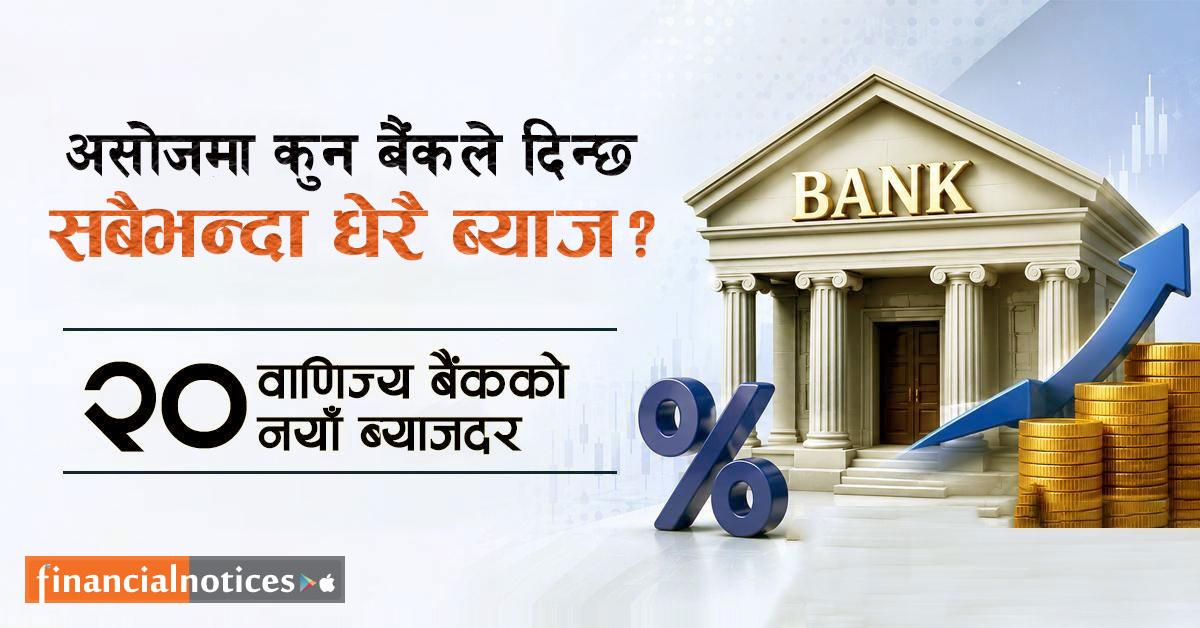
The weighted average interbank rate among banks and financial institutions stood at 2.75 percent in the first month of FY 2026/27.
Commercial banks reported a weighted average deposit rate of 3.15 percent, while their weighted average lending rate stood at 6.48 percent.
Overall, the latest figures point to strong external-sector support from remittances and exports, alongside continued growth in bank deposits and private-sector lending on a year-on-year basis. At the same time, inflation remained elevated at 5.96 percent, keeping price pressures an important part of the economic picture.
देशको वर्तमान आर्थिक तथा वित्तीय स्थिति (आर्थिक वर्ष २०८३-८४ को पहिलो महिनाको तथ्याङ्कमा आधारित)
Published by Nepal Rastra Bank on 2083-6-2
View More by Nepal Rastra Bank