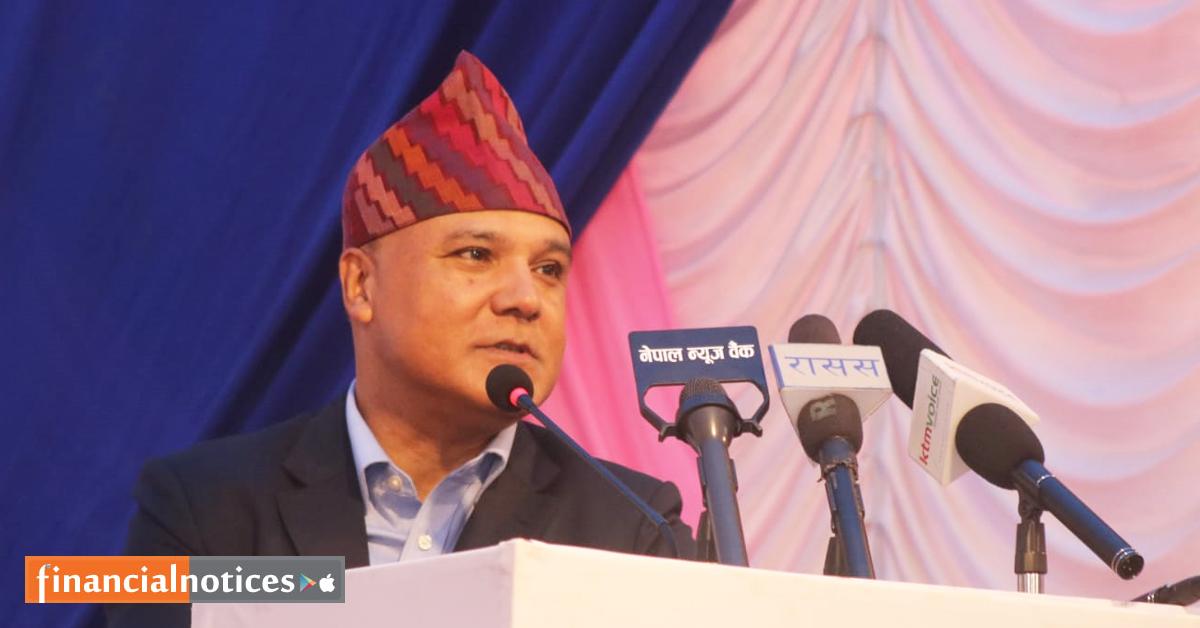
Kathmandu, Nepal – Deputy Governor of Nepal Rastra Bank, Bambahadur Mishra, stated that some of the regulatory measures taken by the central bank have already shown positive signals. He made these remarks during a discussion program on "Monetary Policy Directions, Credit Expansion, and Auto Business" organized by the Economic Media Association Nepal (EMAN) on Sunday.
Deputy Governor Mishra commented, "Some regulatory measures we have implemented are evident in the auto and stock markets. Currently, the increase in non-performing assets (NPA) is seen as a problem, and if some money flows into real estate, it might also reduce."
He indicated that if the Internal Combustion Engine (ICE) business is significantly impacted, the central bank may review its policies. "Currently, there is a 20% down payment requirement for Electric Vehicles (EVs) and 40% for ICEs," he said, addressing concerns raised by NADA President Chaudhary. "Nepal Rastra Bank's policy is dynamic; if sales are entirely halted, we will discuss it."
He also noted that both the government and Nepal Rastra Bank have prioritized EVs from an environmental standpoint. "It was pleasing to see the vehicles assembled in Nepal showcased at the NADA Auto Show," Mishra added.
Upendra Paudel, President of the Confederation of Banks and Financial Institutions Nepal (CBFIN), expressed that the increase in EVs at the auto show is beneficial for the country. "The rise in EV consumption might have reduced revenue in the short term, but in the long run, it will reduce petroleum imports," Paudel remarked. "Adopting sustainable development goals of the United Nations, the shift in consumption patterns is quite positive."
He emphasized that EV importers should focus on vehicle quality to enable banks to provide loans for 10-15 years. "So that banks can offer loans for a 10-15 year period," he mentioned.
Sunil KC, President of the Nepal Bankers' Association and CEO of NMB Bank, observed that the government's policies, mindful of environmental balance, were reflected at the NADA Auto Show. "Banks have provided over NPR 350 billion in loans to the energy sector," he said, "There is also the matter of consuming the produced energy. I am confident that the growing import and sale of EVs supports the ecosystem."
He noted that the NADA Auto Show has made the banking sector somewhat vibrant amid a slowing economy. "Relevant businesses should focus on building infrastructure like charging stations to make the electric vehicle business sustainable," KC stated. "The banking sector is ready to move forward together."
Suyog Shrestha, President of the Development Bankers Association and CEO of Shangri-La Bank, pointed out that the overall economic downturn has also affected the auto sector. "Therefore, without the overall economy improving, it is unlikely for any single sector to prosper," he noted.
He mentioned that around 95% of the stalls at the NADA Auto Show 2024 featured electric vehicles, and a similar proportion of bookings were made for electric vehicles. "The bullish trend in the stock market seems to be a result of the policies adopted by Nepal Rastra Bank," CEO Shrestha added, "The situation of car bookings at NADA could be seen as an indicator of the rising stock market."
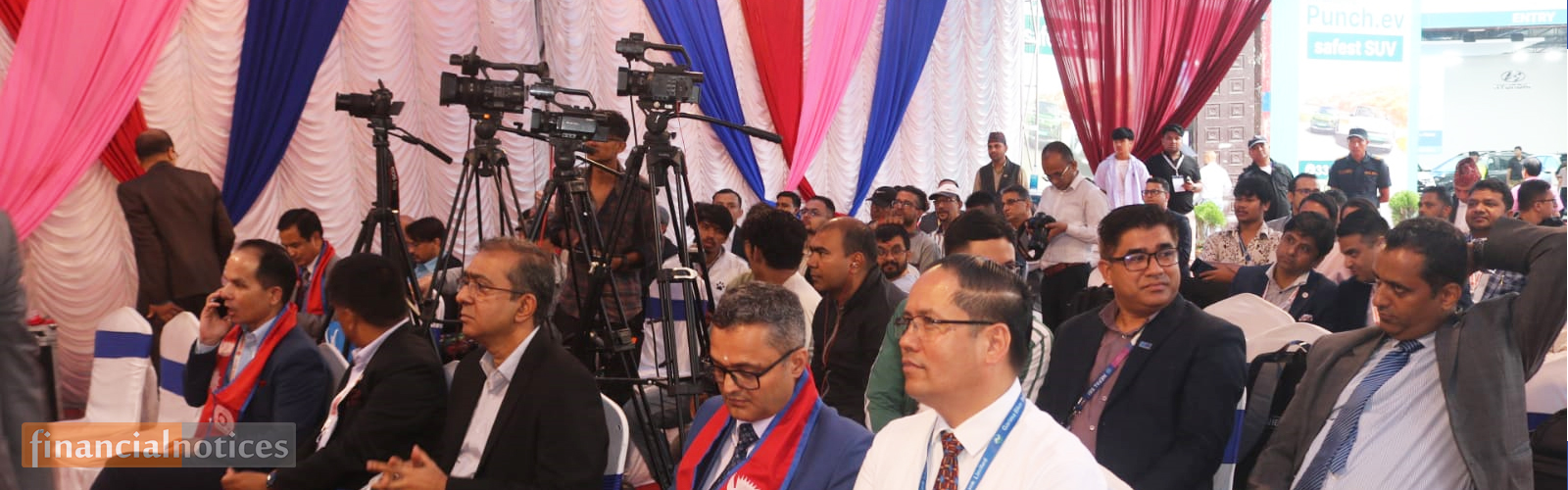
Karan Kumar Chaudhary, President of the NADA Automobiles Association of Nepal, expressed that while the government has given maximum priority to electric vehicles (EVs), it has overlooked petroleum vehicles (Internal Combustion Engine - ICE). He accused the government of creating a stark disparity between ICEs and EVs, mainly through taxation.
"The prioritization of EVs has significantly expanded the EV market, which is a positive development," he stated, "But currently, the ICE business is almost stagnant. We are not asking the government to increase taxes on EVs, but rather to reduce taxes on ICEs to help the business grow."
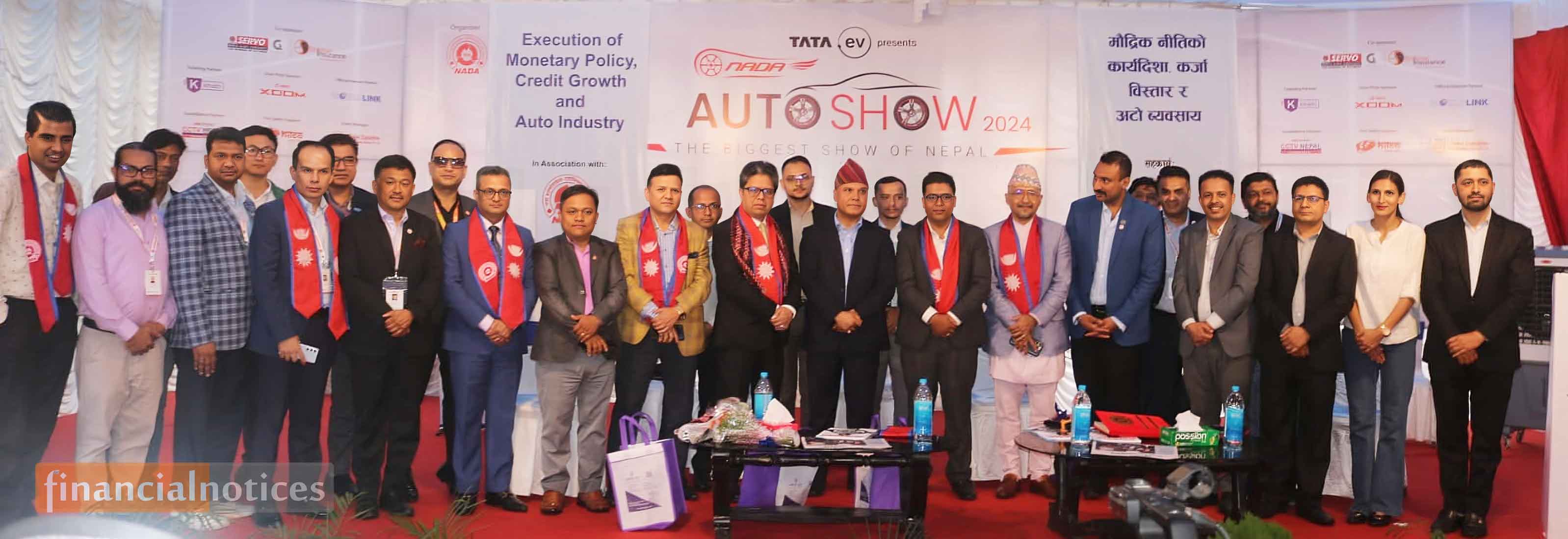
He called for special initiatives from the central bank to revive the shrinking auto sector. "The impact has been felt in the auto business as small and medium enterprises have struggled to remain operational," Chaudhary said.
Ashok Khadka, General Secretary of Nepal Insurance Association and CEO of Neco Insurance, discussed the significant outflow of money through EVs. "A lot of foreign currency has left the country through EVs, but the government has not been able to collect corresponding revenue," he stated, "It's necessary to account for how much foreign currency is leaving and how much revenue is being generated."